Retired people who are counting on using their house equity to help fund shift to assisted living; those who wish to keep their home in the family or preserve their inheritance for their heirs. Borrowers presently paying above-market interest rates; debtors who wish to reduce their loan term; debtors who desire to replace an ARM with a more foreseeable fixed-rate; borrowers dealing with a balloon payment.
House owners looking for a home equity loan who would also gain from refinancing their existing home loan. House owners looking for a house equity loan who would acquire little or no cost savings from re-financing their existing mortgage. Underwater borrowers or those with less than 20 percent home equity; those looking for to refinance at a lower rate of interest; borrowers with an ARM or upcoming balloon payment who want to convert to a fixed-rate loan.
Newbie homebuyers, purchasers who can not set up a large down payment, customers acquiring a low- to mid-priced home, purchasers looking for to buy and enhance a home with a single home mortgage (203k program). Borrowers buying a high-end home; those able to install a deposit of 10 percent or more.
Non-veterans; veterans and active responsibility members who have actually exhausted their standard privilege or who are looking to acquire financial investment property. Novice purchasers with young families; those presently living in crowded or out-of-date housing; citizens of rural locations or little neighborhoods; those with limited earnings Urban dwellers, homes with above-median earnings; single wesley mcdowell persons or couples without kids.
One of the very first questions you are bound to ask yourself when you wish to buy a house is, "which home mortgage is right for me?" Generally, purchase and re-finance loans are divided into fixed-rate or adjustable-rate mortgages. Once you select repaired or adjustable, you will also require to consider the loan term.
Long-term fixed-rate home loans are the staple of the American home mortgage market. With a set rate and a repaired regular monthly payment, these loans supply the most stable and foreseeable cost of homeownership. This makes fixed-rate home loans incredibly popular for homebuyers (and refinancers), especially at times when rate of interest are low - which of these statements are not true about mortgages. The most common term for a fixed-rate mortgage is thirty years, but shorter-terms of 20, 15 and even 10 years are likewise offered.
The smart Trick of What Is The Deficit In Mortgages That Nobody is Talking About
Given that a greater month-to-month payment restricts the quantity of home mortgage a provided income can support, many property buyers decide to spread their month-to-month payments out over a 30-year term. Some home mortgage lenders will enable you to tailor your home loan term to be whatever length you want it to be by changing the regular monthly payments.
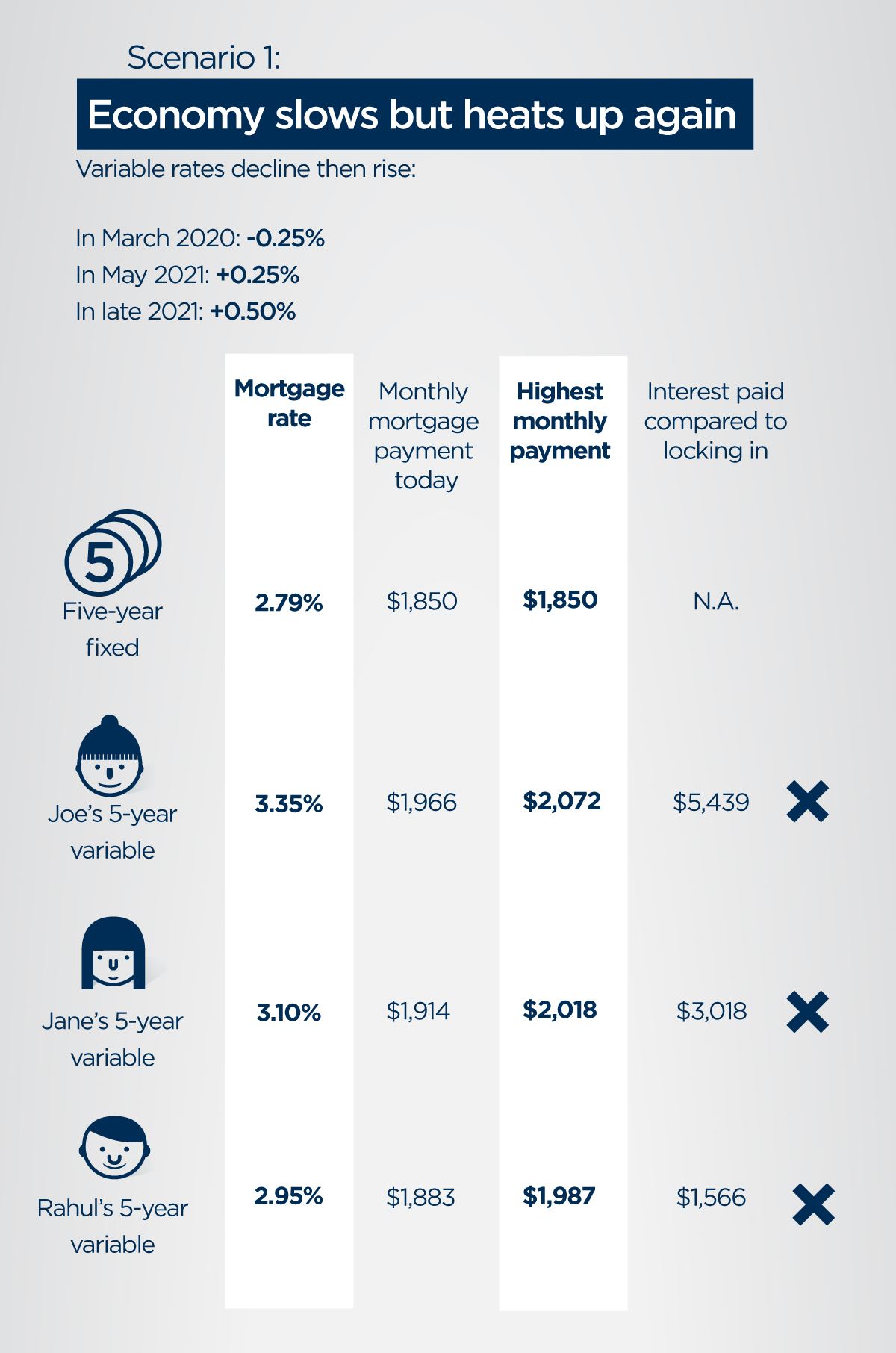
Because regular monthly payments can both fluctuate, ARMs bring risks that fixed-rate loans do not. ARMs are useful for some debtors-- even very first time debtors-- but do need some extra understanding and diligence on the part of the consumer. There are knowable risks, and some can be handled with a little planning.
Traditional ARMs trade long-term stability for routine modifications in your interest rate and regular monthly payment. This can work to your advantage or drawback. Traditional ARMs have rates of interest that change every year, every 3 years or every 5 years. You may hear these described as "1/1," "3/3" or " 5/5" ARMs.
For example, initial rates of interest in a 5/5 ARM is fixed for the first 5 Click here to find out more years. After that, the rate of interest resets to a brand-new rate every 5 years till the loan reaches the end of its 30-year term. Standard ARMs are typically offered at a lower initial rate than fixed-rate mortgages, and normally have payment terms of thirty years.
Obviously, the reverse holds true, and you might end up with a higher rate, making your home loan less budget friendly in the future. Note: Not all lending institutions use these items. Standard ARMs are more beneficial to homebuyers when rate of interest are relatively high, since they provide the possibility at lower rates in the future.
Like standard ARMs, these are typically readily available at lower rates than fixed-rate home mortgages and have overall payment regards to 30 years. Due to the fact that they have a range of fixed-rate periods, Hybrid ARMs offer debtors a lower preliminary interest rate and a fixed-rate home mortgage that fits their anticipated amount of time. That stated, these items carry dangers because a low set rate (for a couple of years) could come to an end in the middle of a higher-rate environment, and month-to-month payments can jump.
A Biased View of What Mortgages Do First Time Buyers Qualify For In Arlington Va
Although often discussed as though it is one, FHA isn't a home loan. It means the Federal Real Estate Administration, a federal government entity which essentially runs an insurance coverage swimming pool supported by fees that FHA home mortgage borrowers pay. This insurance coverage swimming pool virtually removes the danger of loss to a lending institution, so FHA-backed loans can be provided to riskier customers, specifically those with lower credit rating and smaller deposits.
Popular among newbie property buyers, the 30-year fixed-rate FHA-backed loan is readily available at rates even lower than more standard "conforming" home mortgages, even in cases where customers have weak credit. While deposit requirements of as little as 3. 5 percent make them especially attractive, borrowers need to pay an upfront and yearly premium to fund the insurance coverage pool kept in mind above.
To read more about FHA home mortgages, check out "Benefits of FHA home mortgages." VA home mortgage are home loans ensured by the U.S. Department of Veterans Affairs (VA). These loans, problems by personal lenders, are provided to qualified servicemembers and their families at lower rates and at more favorable terms. To determine if you are qualified and to read more about these home loans, visit our VA mortgage page.
Fannie Mae and Freddie Mac have limitations on the size of home loans they can buy from lenders; in the majority of locations this cap is $510,400 (approximately $765,600 in certain "high-cost" markets). Jumbo home loans can be found in fixed and adjustable (standard and hybrid) varieties. Under regulations imposed by Dodd-Frank legislation, a meaning for a so-called Qualified Mortgage was set.
QMs likewise enable customer debt-to-income level of 43% or less, and can be backed by Fannie Mae and Freddie Mac. Presently, Fannie Mae and Freddie Mac are utilizing special "temporary" exemptions from QM rules to buy or back home loans with DTI ratios as high as 50% in some scenarios.
Non-QM home mortgages may be used by loan providers, who generally put them in their "portfolio" of loans they hold. For the most part, they are made only to the very best certify debtors or those who have strong risk-offsetting monetary qualities, such as a big down payment or extremely high levels of possessions.
The Single Strategy To Use For When Do Reverse Mortgages Make Sense
I found myself all of a sudden home shopping this month (long story), and even for somebody who operates in the monetary industry, there were lots of terms I was not familiar with. One of the most confusing actions in the house purchasing process was understanding the different kinds of mortgages readily available. After a great deal of late night invested investigating the various kinds of home mortgages offered, I was lastly about to make my choice, however I'll conserve that for the end.